
Author’s Note: This essay was originally written for an introductory class to Shakespeare’s work, way back when I was an English major. I’m not an English major anymore, but I am still a Shakespeare nerd with a lot of feelings about Hamlet. Feel free to use this as a starting point for your own work or reference it in your essays with proper credit, please. For author’s name, please use Lewis Groleau. Thanks!
“Your Hamlet is not my Hamlet, for your ego is not my ego. Yet both your Hamlet and mine are really existent; and mine is as much to my life as yours to yours,”
– G.L. Kittredge, Shakespere: An Address, 1916, Apr. 23
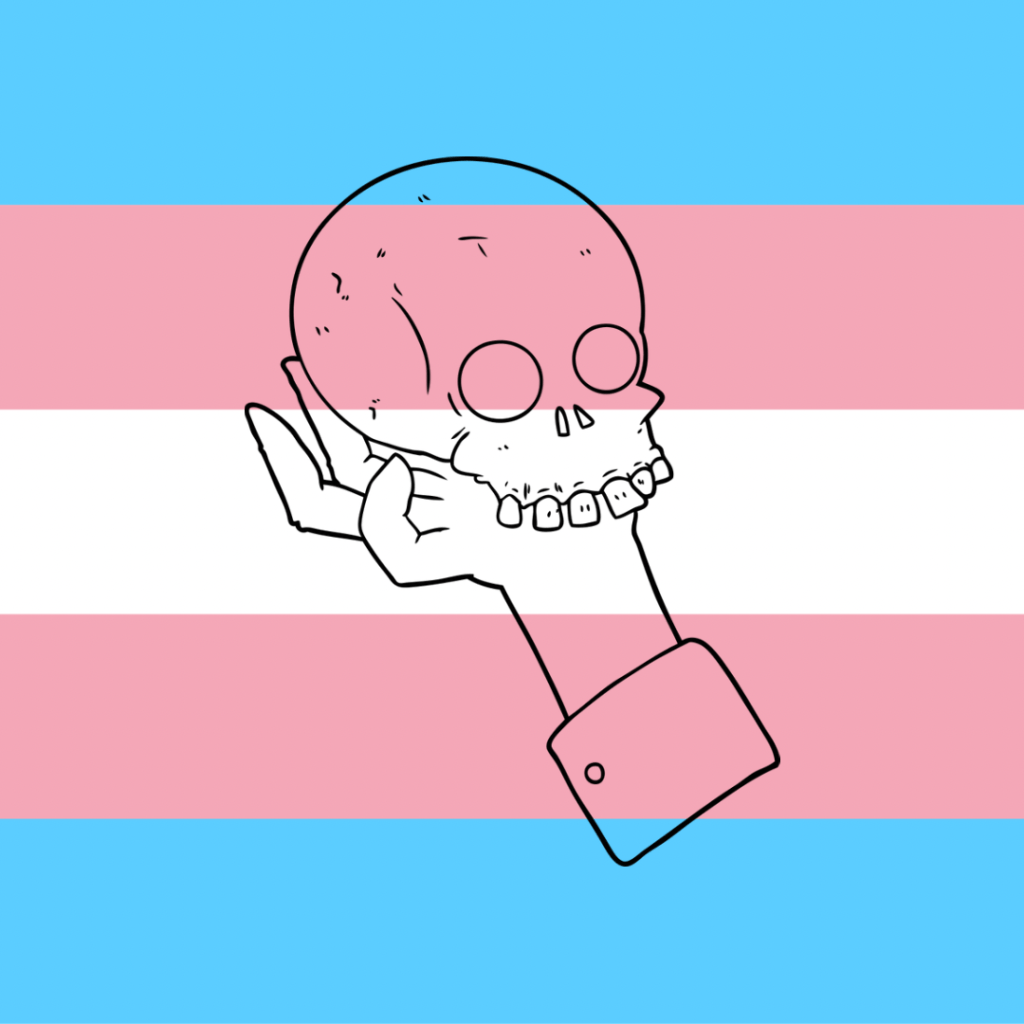
It’s often said that theatre is a mirror, that the audience should find a reflection of themselves within the art. All art says something about us or the world we live in, but theatrical performance inspires more reflection than other art forms. Hamlet is a play where the reflections each audience member sees are incredibly different. Your Hamlet is not my Hamlet, because we have different lives. However, there is something in the tragedy for all of us. Mothers may feel represented in Gertrude’s love for Hamlet, battered women may take comfort in Ophelia, brothers might relate to Laertes’ rage. In Prince Hamlet, we can see a transgender man.
A transgender interpretation of Hamlet supports inclusion, but it also adds a great deal to the production. Hamlet is full of references to gender. Adding a trans Hamlet creates layers in Hamlet’s relationships with men, women, and power. Academics, theatrical artists, and audiences have been playing in the Hamlet sandbox for years. An interpretation with a transgender main character is like a brand new shovel. It allows us to view the text and characters differently. With a transgender Hamlet, the themes of family, fate, failure, and misogyny within the show take on new meaning. Like a sandcastle built from sand that has been a million castles before, a transgender Hamlet gives the text a different and special life – even as it remains the same.
Although the idea might appear to be connected to the recent rise in LGBT media representation, the connection between Hamlet and womanhood isn’t new. In 1982, Joseph Papp directed a production of Hamlet at The Public Theater in New York City where the title role was played by a woman. When speaking on this, Papp said he “always felt that there is a strong female side to Hamlet – not feminine so much as female” (Papp). The distinction between feminine and female is important here. Femininity is seen as a behavior, but female is a lived experience. Feminine behavior in American culture is characterized by a submissive and passive nature, wearing pink, being physically weaker and concerned with your outward appearance. Being assigned female at birth comes with those behaviors and expectations being forced upon you as you develop. Someone who has the experience of being female knows those expectations and behaviors, but wouldn’t choose them like someone who is feminine might. Even a transgender person that rejects womanhood will still have the experience of someone trying to make them act like one.
Some might reject the idea of a transgender Hamlet, because they do not see any connection to femininity in him. Long, introspective monologues are not in line with the expectation that a woman is seen but not heard. Although Hamlet is plagued by indecision and inaction, it would be wrong to characterize him as passive or submissive. But if we choose to look for connections to a female experience instead of a feminine one, we find much more in the text.
When we first see Hamlet, Claudius addresses him. Claudius tells his nephew/stepson to abandon his “unmanly grief” as it shows “ a will most incorrect to heaven” (Shakespeare, 1.2.94-95). The audience knows precious little about Hamlet at this point in the play. After all, he has only been onstage for roughly 90 lines. What we know is that Hamlet is grieving extensively. Hamlet’s grief for his father seems to be at the core of him – he is not who he was before his father died. Claudius commenting that the grief Hamlet so identifies with is ‘unmanly’ suggests a derision of Hamlet’s masculinity as well. It is interesting for gender to be mentioned so early in Hamlet’s stage time. When Shakespeare introduces us to Hamlet, he wants us to note a few things: Hamlet’s father is dead and he is not taking it well, he has some negative feelings associated with his Uncle and Mother and that he is somehow concerned with gender. This is shown further in Hamlet’s first soliloquy, the ‘sullied flesh’ speech.
Within the ‘sullied flesh’ speech in the same scene, Hamlet likens all women to frailty. “Frailty, thy name is Woman,” shows Hamlet’s contempt for his mother’s weak morals (Shakespeare, 1.2.146). When we add the layer of a transgender Hamlet, the line has a biting sense of self hatred. Being a transgender man doesn’t make you a raging misogynist, but it can make you view the gender you were assigned at birth with some discomfort. Most transgender people experience Gender Dysphoria. Gender Dysphoria is “a sense of unease that a person may have because of a mismatch between their biological sex and their gender identity” (National Health Service, 2020). Dysphoria symptoms include discomfort or distress associated with the gender you are assigned at birth. A trans Hamlet allows us to draw a connection between Hamlet’s negative associations with femininity and his own self-loathing, as well as his feelings towards Gertrude. In a production based on this concept, the line now refers to a discomfort with the weakness Hamlet found in the female-ness of both himself and his mother.
A transgender Hamlet lives at the intersection of internalized misogyny and transphobia. Misogyny is an ingrained prejudice against women, and internalized misogyny describes the behaviors or beliefs that growing up in a sexist world might leave behind. It is common for people with internalized misogyny to resent women who are not living up to the high standards set for them. We could find an example of this in Hamlet’s constant ‘slut-shaming’ towards Gertrude. In 3.4, Hamlet tells Getrude that her marriage to Claudius is an act “[t]hat blurs the grace and blush of modesty, / Calls virtue hypocrite, takes off the rose / From the fair forehead of an innocent love / And sets a blister there,” (Shakespeare, 3.4. 40-43). Although the marriage between Claudius and Gertrude is unsettling, does it really destroy the innocence of love?
The misogyny that fosters Hamlet’s anger for Gertrude can take many different shapes. It all depends on the given circumstances of the production. A cisgendered Hamlet within a period production would feed his misogyny with social constructs telling him that women were inferior beings. He might buy into the idea that women were sinful and weaker than men, so they needed a strong and masculine disciplining voice. With his father gone and no trust in Claudius, Hamlet might believe it is his responsibility to discipline Getrude. In a world with a transgender Hamlet, Hamlet would certainly come from a different point of view. He may still feel that womanhood is inferior, and place himself above any people who embrace womanhood. His view of womanhood may be rather flat and one dimensional. He does not attack Gertrude for her morals, except those relating to sex and marriage. Does he believe that if women are choosing to only concern themselves with feminine things such as sex, marriage and homemaking, they should be ‘good’ at it? Perhaps he feels that Gertrude has failed at being a woman because she doesn’t fit his idea of a good one. In this view, Hamlet himself has failed at being a woman, too. He was born one, but he isn’t one. Although he is sure he is above the women in the play, he still feels negatively about himself in relation to his gender assigned at birth. Hamlet seems aware that he is leagues above the rest of the inhabitants of Elsinore intellectually. But he is also aware that his body doesn’t match the strength of his mind.
As Shakespeare’s longest play, Hamlet contains a multitude of threads we can follow. The many themes and minute details within the play can be played with to create a production that truly engages modern audiences. A transgender Hamlet allows transgender people to see themselves reflected in a tragic hero and strengthens the themes of gender that run throughout the text. A trans Hamlet is an opportunity to add gender dysphoria to themes the show already explores, such as misogyny, familial relationships, fate and failure.
WORKS CITED:
Kittredge, George Lyman. “Shakespere: An Address”, 1916
National Health Service. “Overview: Gender dysphoria.” Health A to Z, Last Reviewed May 2020, https://www.nhs.uk/conditions/gender-dysphoria/ . Accessed March 6, 2023.
Papp, Joseph. “WHY NOT A WOMAN AS HAMLET?.” Interview by Leslie Bennetts. The New York Times, Nov. 28, 1982, https://www.nytimes.com/1982/11/28/theater/why-not-a-woman-as-hamlet.html .
Shakespeare, William. Hamlet. Edited by Abigail Roskin-Woodall, Bloomsbury, 2017
 Lewis’ letters
Leave a comment